
The Pulse of the City: How Street Food and Public Transit Weave the Fabric of Urban Life
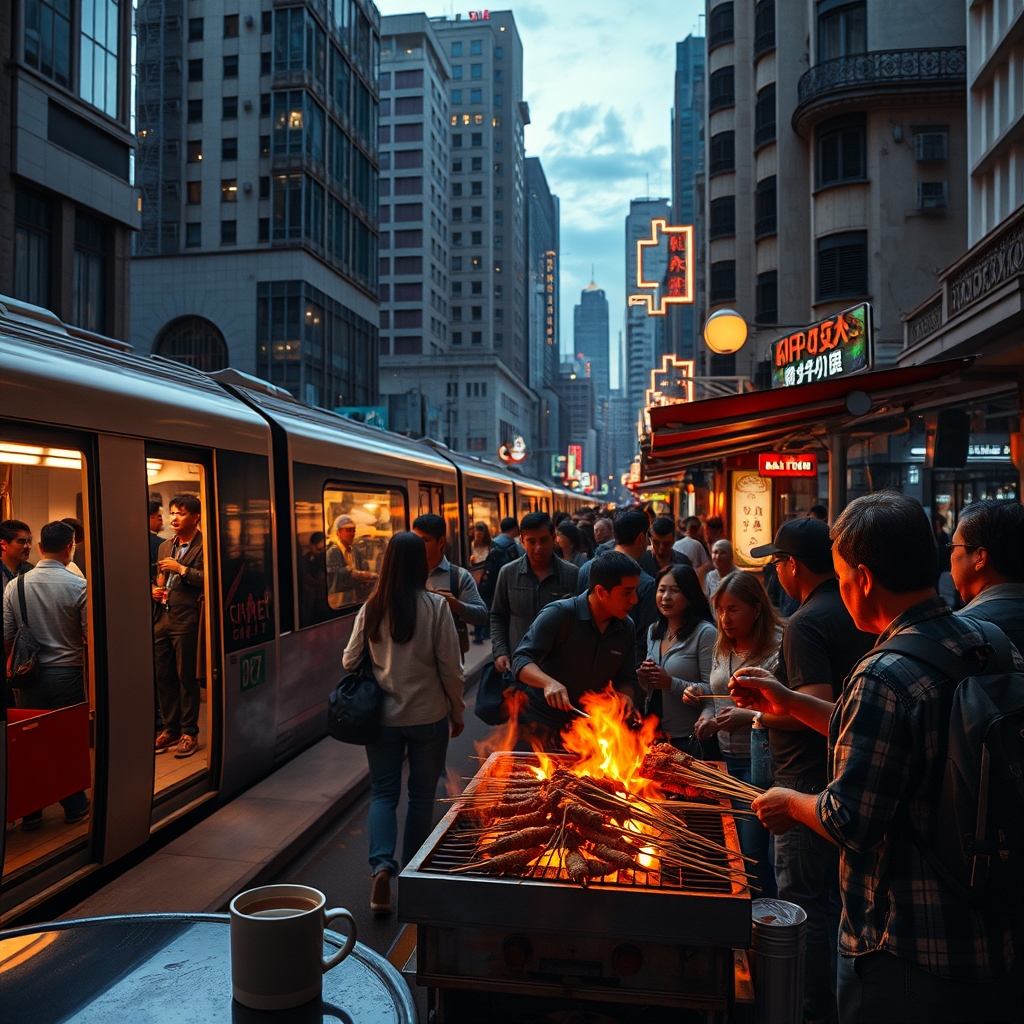
Cities are more than just concrete jungles; they are living, breathing entities that tell stories through their streets, sounds, and flavors. For those who seek to truly understand a city, the key lies not in the glossy postcards or crowded tourist spots, but in the rhythm of its daily life—where the hum of public transit and the sizzle of street food stalls become the soundtrack of urban exploration. This is where the soul of a city reveals itself, in the unscripted moments that unfold between destinations.
The Metro as a Cultural Time Machine
Public transit is often seen as a means to an end, a way to get from point A to point B. But for the curious traveler, it is so much more. A metro ride is a microcosm of urban life, a cross-section of the city’s diversity. From the hurried commuter clutching a coffee cup to the musician strumming a guitar in the corner, every carriage tells a story. In cities like Tokyo, London, or Mexico City, the metro isn’t just a mode of transport—it’s a cultural time machine, offering glimpses into the lives of locals in a way that no guided tour ever could.
Take the Paris Métro, for instance. Beyond its iconic Art Nouveau entrances, the underground network is a labyrinth of history and art. Stations like Louvre-Rivoli and Arts et Métiers are designed to reflect the cultural landmarks above, blurring the line between transit and experience. Similarly, in Moscow, the metro stations double as underground palaces, adorned with chandeliers, mosaics, and sculptures that celebrate the city’s rich heritage. These spaces transform the mundane act of commuting into an opportunity for discovery, proving that even the most utilitarian aspects of city life can be infused with beauty and meaning.
Street Food: The Flavor of Authenticity
If public transit is the veins of a city, then street food is its heartbeat. The aroma of sizzling skewers, the clatter of woks, and the laughter of vendors haggling with customers—these are the sounds and smells that define a city’s culinary identity. Street food is more than just a quick bite; it’s a gateway to understanding the local culture, history, and even politics. In Bangkok, the bustling stalls of Yaowarat Road offer everything from pad thai to mango sticky rice, each dish a testament to the city’s vibrant street food scene. In Istanbul, the scent of simit and grilled corn fills the air, drawing both locals and travelers into a shared experience of flavor and tradition.
What makes street food so compelling is its accessibility. Unlike fine dining, which often requires reservations and a hefty budget, street food is democratic. It’s for the office worker grabbing a quick lunch, the student on a budget, or the traveler seeking an authentic taste of the city. It’s also a reflection of the city’s evolution—how waves of migration, trade, and innovation have shaped its culinary landscape. In Singapore, for example, the hawker centers are a melting pot of Chinese, Malay, Indian, and Peranakan influences, each stall telling a story of cultural fusion. These spaces are not just places to eat; they are communal hubs where strangers become neighbors over a shared love of food.
The Intersection of Transit and Taste
The magic happens when public transit and street food intersect. Imagine stepping off a subway train in Taipei and being greeted by the neon glow of a night market, where the air is thick with the scent of stinky tofu and bubble tea. Or disembarking from a tram in Lisbon to find a pastelaria serving warm pastéis de nata, the flaky custard tarts that are a symbol of Portuguese culinary heritage. These moments are the essence of urban exploration—unplanned, spontaneous, and deeply rewarding.
Cities that embrace this synergy between transit and food create environments where exploration feels effortless. In Barcelona, the metro system connects travelers to some of the city’s best tapas bars, while in Seoul, the subway map doubles as a guide to the city’s legendary street food markets. These connections make it possible to experience a city’s culture in a single day, hopping from one neighborhood to the next, each stop offering a new flavor, a new story, a new memory.
Beyond the Guidebook: Crafting Your Own Urban Narrative
The most memorable city experiences are often the ones that aren’t scripted. They’re the detours—the alleyway you stumbled upon while trying to find a metro station, the food stall recommended by a local, the conversation with a stranger on a bus. These are the moments that turn a trip into a story, a collection of serendipitous encounters that reveal the true character of a city. The key is to approach urban exploration with an open mind and a willingness to get lost, even if just for a little while.
Technology has made it easier than ever to navigate cities, but it’s important not to let it overshadow the joy of discovery. While apps and maps can guide you to the must-see sights, they can’t replicate the thrill of stumbling upon a hidden courtyard or a pop-up art installation. The best urban explorers know when to put the phone away and let the city guide them. Whether it’s following the scent of freshly baked bread to a neighborhood bakery or taking a wrong turn that leads to a stunning viewpoint, these unplanned moments are often the ones that stay with you long after you’ve returned home.
Cities are dynamic, ever-changing landscapes, and the way we experience them should be just as fluid. By embracing the rhythm of public transit and the flavors of street food, we tap into the pulse of urban life. It’s in these everyday moments—waiting for a train, sharing a meal with strangers, wandering without a destination—that we find the true essence of a city. And perhaps, in the process, we discover a little something about ourselves as well.


