
The Hidden Gems of Metro Travel: How Public Transit Unlocks Authentic City Experiences
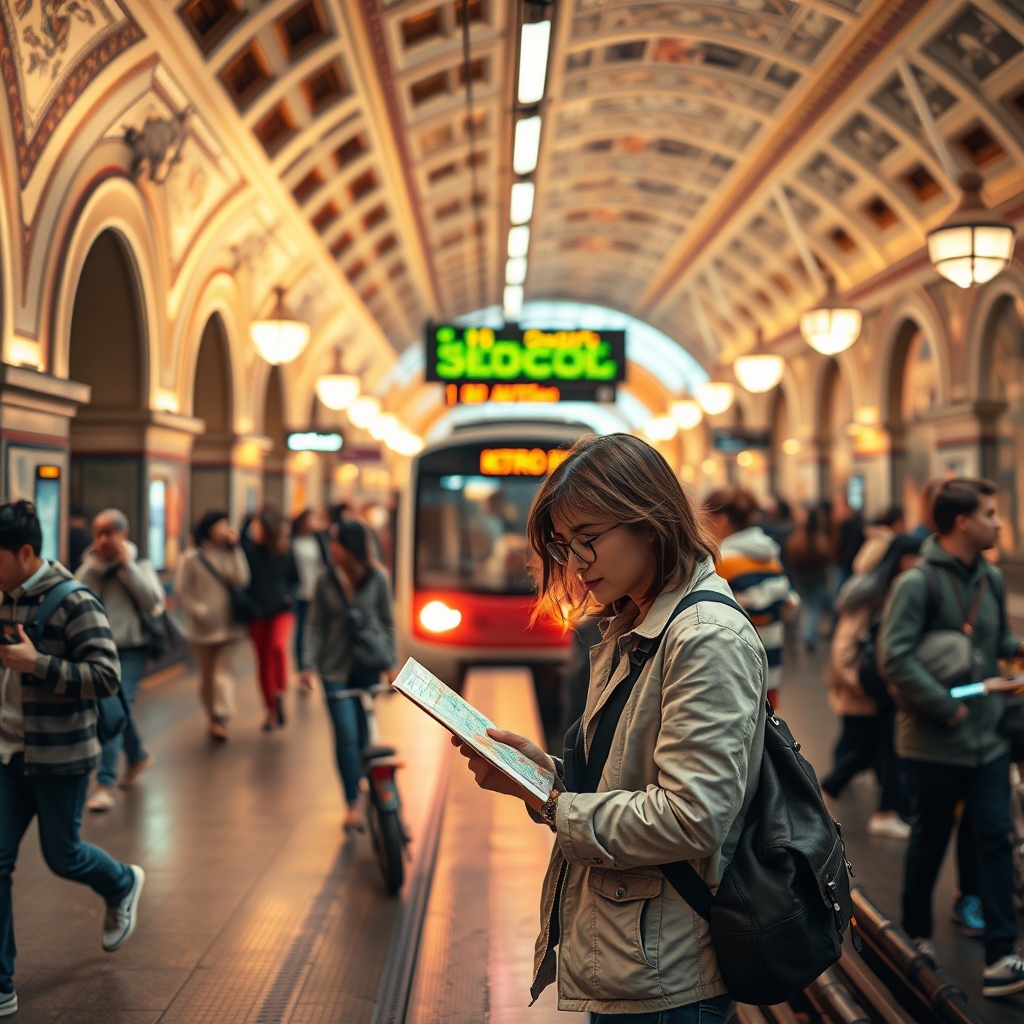
There’s something almost magical about stepping onto a bustling metro platform, the hum of the city vibrating beneath your feet as trains arrive and depart like clockwork. For many travelers, public transit is merely a means to an end—a way to get from point A to point B as quickly as possible. But for those willing to slow down and observe, metro systems are gateways to the soul of a city, revealing layers of culture, history, and local life that taxis and ride-sharing apps often bypass.
The Metro as a Cultural Time Capsule
Cities with well-established metro systems often treat their underground networks as canvases for storytelling. In Moscow, the metro stations are adorned with intricate mosaics, chandeliers, and sculptures that celebrate Soviet history and art. In Stockholm, the Tunnelbana doubles as the world’s longest art gallery, with over 90 stations featuring installations that reflect Swedish culture, from Viking legends to modern abstract designs. Even in newer systems like Dubai’s Metro, sleek futuristic designs mirror the city’s ambition and innovation.
These stations aren’t just transit hubs; they’re microcosms of the city’s identity. Riding the metro becomes a journey through time, where every stop offers a glimpse into the past, present, and future of urban life. For travelers, this means that even a simple commute can turn into an impromptu history lesson or an art appreciation tour.
Navigating Like a Local: The Unwritten Rules of Metro Travel
While guidebooks provide maps and schedules, the true art of metro travel lies in mastering its unspoken etiquette. In Tokyo, silence is golden—passengers board trains in hushed tones, and phone calls are frowned upon. In New York, the subway’s rhythm is fast-paced and chaotic, with locals weaving through crowds with practiced ease. In Lisbon, elderly passengers are often given priority seating, a small but telling reflection of the city’s respect for its elders.
Observing these nuances can transform a mundane ride into a cultural immersion. Strike up a conversation with a commuter, and you might discover a hidden café, a neighborhood festival, or a local band playing in an underground venue. The metro isn’t just a way to get around; it’s a social ecosystem where the city’s heartbeat is most palpable.
Beyond the Tourist Traps: Discovering Neighborhoods Off the Beaten Path
One of the greatest advantages of metro travel is its ability to whisk you away from overcrowded tourist hotspots and into the heart of a city’s authentic neighborhoods. In Paris, the Métro line 2 takes you to Belleville, a multicultural enclave where street art thrives and family-run bistros serve up North African and Asian flavors. In Mexico City, the Metrobus connects you to Roma Norte, a trendy district filled with bookshops, rooftop bars, and galleries housed in colonial-era buildings.
These areas often lack the polish of downtown attractions but make up for it with raw, unfiltered charm. Here, you’ll find local markets, indie boutiques, and parks where residents gather for picnics or impromptu soccer games. The metro becomes your compass, guiding you to places where the city’s true character shines.
The Rise of Micro-Mobility: When Metro Meets Modern Urban Exploration
While metros are the backbone of urban transit, the rise of micro-mobility—electric scooters, bike-sharing programs, and e-bikes—has added a new dimension to city exploration. Many cities now integrate these options seamlessly with their public transit systems, allowing travelers to combine metro rides with short, eco-friendly jaunts. In Barcelona, for example, you can hop off the metro at Arc de Triomf, rent a bike, and pedal along the Ciclovía, a car-free path that winds through the city’s green spaces and historic landmarks.
This hybrid approach to urban travel encourages spontaneity. Missed your metro stop? No problem—grab a scooter and explore the side streets instead. Stumbled upon a night market while walking back to your hotel? Park your bike and dive in. Micro-mobility doesn’t just complement metro travel; it turns the entire city into a playground for discovery.
The Digital Nomad’s Metro: Working on the Go
For digital nomads, the metro isn’t just a mode of transport—it’s a mobile office. Cities with reliable Wi-Fi and comfortable seating, like Seoul’s subway or Berlin’s U-Bahn, have become havens for remote workers. Many metros now offer USB charging ports, quiet cars, and even co-working spaces at major hubs. In Tokyo, some stations feature ekiben (train bento boxes) that double as portable lunches, perfect for fueling a productive commute.
But the real perk of working on the metro is the inspiration that comes from being surrounded by the city’s energy. A writer might find a story idea in the overheard conversation of two strangers. A designer could draw inspiration from the architecture of a historic station. The metro becomes a moving incubator for creativity, where the boundaries between work and exploration blur.
Bleisure Travel: Blending Business and Leisure on the Metro
The concept of bleisure travel—combining business trips with leisure activities—has gained traction in recent years, and the metro is the perfect tool for making the most of these hybrid journeys. After a day of meetings, why not take the metro to a local food market or a historic district? In Singapore, the MRT connects business hubs like Raffles Place to cultural gems like Chinatown or Little India, where you can unwind with a plate of chili crab or browse vibrant textile shops.
The key to successful bleisure travel is efficiency, and the metro delivers. No need to waste time hailing cabs or navigating traffic—just hop on and let the city come to you. Whether it’s a quick detour to a boutique hotel’s rooftop bar or a spontaneous architecture walk, the metro makes it easy to squeeze in moments of joy amid a busy schedule.
Every city has its own rhythm, and the metro is the metronome that keeps it in time. Whether you’re a first-time visitor or a seasoned traveler, stepping onto a train is an invitation to see the city through a different lens—one that reveals its secrets, its stories, and its soul. The next time you find yourself in an unfamiliar city, skip the tourist bus and take the metro instead. You might just find that the best experiences aren’t at the destination, but in the journey itself.


