
Digital Dreamscapes: How Virtual and Augmented Realities Are Transforming Leisure Destinations
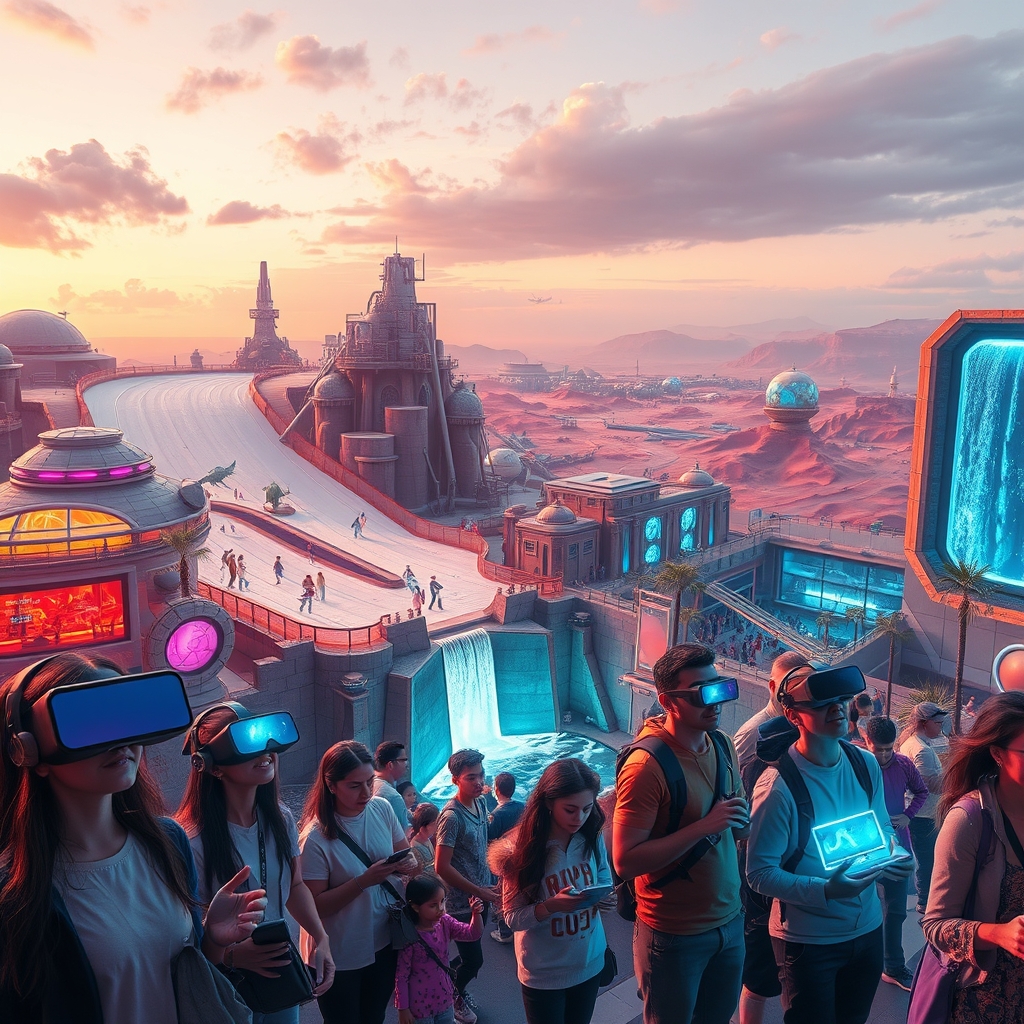
Imagine stepping into a world where the boundaries between reality and imagination blur seamlessly, where you can swim with dolphins in the morning, ski down alpine slopes by noon, and explore the surface of Mars before dinner—all without leaving the same building. This is no longer the stuff of science fiction; it’s the rapidly evolving reality of modern leisure destinations. As technology advances, theme parks, resorts, and entertainment hubs are embracing virtual and augmented realities to create experiences that were once unimaginable. These digital dreamscapes are not just enhancing traditional attractions but are entirely redefining what it means to escape, explore, and play.
The Evolution of Play: From Physical to Digital
For decades, amusement parks and resorts have relied on physical rides, mechanical wonders, and meticulously designed environments to captivate visitors. Roller coasters, water slides, and themed lands like Disney’s Magic Kingdom or Universal’s Wizarding World have set the standard for immersive entertainment. However, as digital technology becomes more sophisticated, the focus is shifting from what can be built in the physical world to what can be conjured in the digital one. Virtual reality (VR) and augmented reality (AR) are at the forefront of this transformation, offering experiences that are limited only by the bounds of creativity.
Take, for example, the rise of VR theme parks like The Void or Zero Latency. These venues use advanced VR headsets, haptic feedback suits, and motion-tracking technology to transport users into fully realized digital worlds. Whether it’s battling zombies in a post-apocalyptic wasteland or exploring the depths of the ocean, these experiences are so immersive that they can make the real world feel distant. Unlike traditional rides, which are constrained by physics and engineering, VR experiences can defy gravity, bend time, and even alter the laws of nature—all with the flick of a switch.
Augmented Reality: Blending the Real and the Fantastical
While VR creates entirely new worlds, augmented reality (AR) enhances the existing one by overlaying digital elements onto the physical environment. This technology has found a natural home in museums, botanical gardens, and even urban spaces, where it can bring static exhibits to life. For instance, the British Museum’s AR app allows visitors to point their phones at ancient artifacts and see them restored to their former glory, complete with interactive stories and animations. Similarly, botanical gardens are using AR to provide visitors with real-time information about plants, turning a simple walk into an educational adventure.
Theme parks are also leveraging AR to create hybrid experiences that combine physical and digital elements. Disney’s Star Wars: Galaxy’s Edge uses AR through the Play Disney Parks app to let visitors interact with droids, solve puzzles, and even participate in missions alongside their favorite characters. The result is a layer of storytelling that deepens the immersion without requiring massive physical structures. AR is proving to be a powerful tool for enhancing the magic of themed environments, making them more dynamic and personalized than ever before.
The Rise of Simulated Environments: More Than Just a Ride
Beyond VR and AR, simulated environments are taking immersion to the next level by recreating entire ecosystems, cities, and even planets. These spaces go beyond traditional themed lands by offering visitors a chance to live within a fully realized alternate reality. For example, CityWalk at Universal Orlando is a replica urban environment that mimics the vibrancy of a real city, complete with themed restaurants, shops, and entertainment venues. Similarly, indoor ski slopes like those found in Dubai’s Mall of the Emirates or Japan’s Snow Town bring the experience of alpine skiing to regions where snow is a rarity.
But perhaps the most ambitious simulated environments are those that recreate entire worlds. Weta Workshop’s Dr. Grordbort’s Inventorium in New Zealand is a steampunk-inspired attraction that transports visitors to a retro-futuristic universe filled with mechanical wonders and fantastical inventions. Meanwhile, projects like Mars World, a proposed space-themed resort in Nevada, aim to simulate the experience of living on Mars, complete with habitats, zero-gravity activities, and even simulated Martian landscapes. These environments are not just attractions; they are fully realized worlds that invite visitors to step into a different reality.
Interactive Museums and Gaming Arcades: Where Learning Meets Play
The line between education and entertainment is blurring thanks to interactive museums and gaming arcades that use technology to engage visitors in new ways. Museums like the Museum of the Future in Dubai or the Exploratorium in San Francisco are designed to be hands-on, encouraging visitors to touch, play, and experiment with exhibits. These spaces use AR, VR, and interactive projections to make learning an active, rather than passive, experience. For example, the ArtLens Gallery at the Cleveland Museum of Art uses AR to let visitors create their own digital artworks inspired by the museum’s collection, then share them with others.
Gaming arcades, too, are evolving beyond the traditional rows of pinball machines and racing simulators. Venues like Two Bit Circus in Los Angeles offer a mix of high-tech games, escape rooms, and VR experiences that encourage collaboration and creativity. These spaces are designed to be social hubs where friends and families can come together to play, compete, and explore. By combining cutting-edge technology with classic arcade fun, they are redefining what it means to spend a night out.
The Future of Leisure: Where Do We Go From Here?
As technology continues to advance, the possibilities for digital dreamscapes are virtually limitless. We are already seeing the emergence of mixed reality (MR) experiences that blend VR and AR to create even more immersive environments. For example, Microsoft’s HoloLens allows users to interact with holograms in the real world, opening up new possibilities for gaming, education, and even tourism. Imagine walking through a botanical garden where digital butterflies flutter around you, or exploring a historical site where holographic guides bring the past to life.
Space tourism, too, is on the horizon, with companies like SpaceX and Blue Origin working to make commercial space travel a reality. While this may seem like a distant dream, simulated space experiences are already available. For instance, Space Center Houston offers VR simulations that let visitors experience a spacewalk or pilot a spacecraft, giving them a taste of what it might be like to explore the cosmos. As these technologies become more accessible, they will undoubtedly shape the future of leisure, offering experiences that are more immersive, personalized, and awe-inspiring than ever before.
The way we play, explore, and escape is changing, and digital dreamscapes are leading the charge. Whether it’s through the lens of a VR headset, the overlay of an AR app, or the fully realized world of a simulated environment, technology is allowing us to experience the impossible. These innovations are not just enhancing traditional leisure destinations; they are creating entirely new ways to connect with the world—and with each other. As we look to the future, one thing is clear: the line between reality and fantasy will continue to blur, and the only limit to where we can go is our imagination.


