
Beyond Reality: How Simulated Environments Are Redefining Travel and Leisure
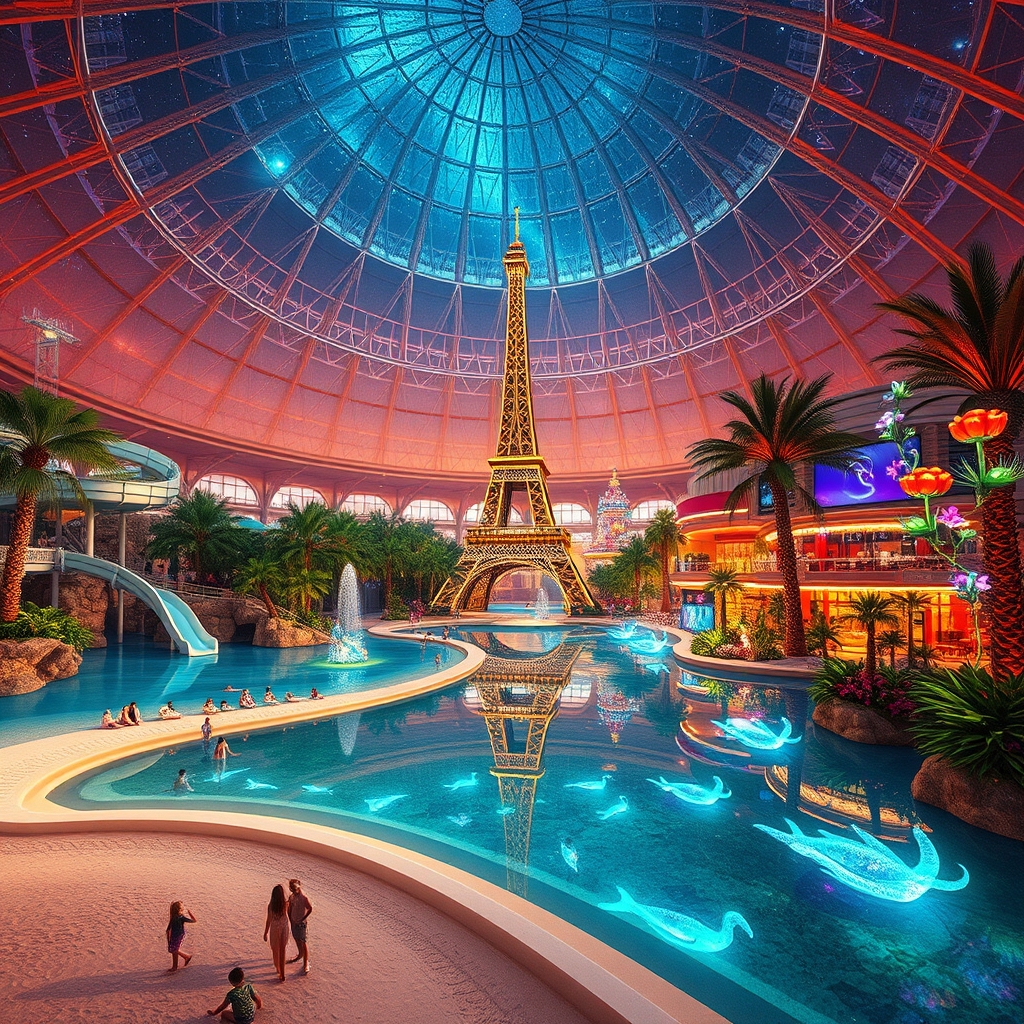
The line between the real and the imagined has never been more blurred, thanks to the rapid evolution of simulated environments. What once belonged to the realm of science fiction—entire cities replicated in meticulous detail, underwater worlds brought to the surface, or even the thrill of space exploration—has now become an accessible reality for travelers and thrill-seekers alike. These immersive experiences are not just reshaping the way we spend our leisure time; they are redefining the very concept of travel, offering alternatives that are safer, more sustainable, and often more awe-inspiring than their natural counterparts.
The Rise of Replica Cities and Themed Escapes
Imagine strolling through the streets of Venice without the crowds, or marveling at the Eiffel Tower without leaving your continent. Replica cities and themed resorts are making this possible, offering hyper-realistic environments that capture the essence of iconic destinations. Places like Venetian Macao in China or Paris Las Vegas in the U.S. have perfected the art of replication, blending architecture, culture, and entertainment into seamless experiences. These destinations don’t just mimic the look of their inspirations; they enhance them with modern amenities, interactive elements, and a level of convenience that real-world travel often lacks.
For those seeking more than just a visual replica, theme resorts take immersion to the next level. Resorts like Disney’s Animal Kingdom Lodge or Universal’s Cabana Bay Beach Resort transport guests into entirely new worlds, where every detail—from the decor to the dining—is designed to reinforce the illusion. These spaces are not just places to stay; they are gateways to alternate realities, where guests can live out fantasies without the constraints of geography or seasonality.
Water Parks and Artificial Beaches: Bringing the Ocean Inland
Not everyone has the luxury of living near a coastline, but that doesn’t mean they have to miss out on the joy of beachside relaxation. Artificial beaches and man-made lakes are transforming landlocked areas into tropical paradises, complete with waves, sand, and even palm trees. Resorts like Wynn Las Vegas have recreated beachfront experiences in the middle of the desert, while Tropical Islands Resort in Germany offers an indoor tropical paradise with a massive dome that houses a beach, lagoons, and even a rainforest.
Water parks have also evolved far beyond simple slides and wave pools. Modern parks like Atlantis The Palm in Dubai or Schlitterbahn in Texas feature artificial reefs, underwater tunnels, and interactive water attractions that blur the line between amusement park and marine adventure. These environments are not just about fun; they’re about education and conservation, offering guests a chance to learn about marine life while enjoying a day of thrill-seeking.
The Science Behind the Illusion
Creating these simulated environments requires a blend of engineering, design, and technology. Wave machines, for example, use complex algorithms to generate realistic ocean waves, while sand is often imported or specially treated to mimic the texture and feel of a natural beach. Even the temperature and humidity are carefully controlled to enhance the illusion, making it easy for guests to forget they’re not actually on a tropical island.
For those who crave even more realism, augmented reality (AR) and virtual reality (VR) are being integrated into these spaces. AR can overlay digital elements onto the physical world, such as interactive maps or virtual sea creatures swimming alongside guests in a water park. VR, on the other hand, can transport users to entirely new dimensions, whether it’s exploring the depths of the ocean or walking on the surface of Mars. These technologies are not just add-ons; they are becoming central to the experience, offering layers of immersion that were once unimaginable.
Indoor Slopes and Mechanical Safaris: Adventure Without Limits
For adventure seekers, simulated environments offer experiences that would otherwise be impossible or impractical. Indoor ski slopes, like those at SnowWorld in the Netherlands or Ski Dubai, bring the thrill of winter sports to regions where snow is a rarity. These facilities use advanced snow-making technology and climate control to create authentic ski conditions year-round, complete with chairlifts, terrain parks, and even après-ski lounges. They’re not just for skiers and snowboarders, either; many of these venues offer tubing, ice climbing, and other winter activities, making them accessible to all ages and skill levels.
On the other end of the spectrum, mechanical safaris and interactive museums are bringing the wild into urban environments. Places like Singapore’s Night Safari or San Diego Zoo’s Safari Park use animatronics, projection mapping, and live animal encounters to create immersive wildlife experiences. Meanwhile, museums like TeamLab Planets in Tokyo or Meow Wolf in the U.S. are redefining the concept of interactive exhibits, turning passive observation into active participation. Visitors can walk through digital waterfalls, solve puzzles in surreal landscapes, or even step into a sci-fi world where the rules of reality no longer apply.
The Future of Simulated Travel
As technology continues to advance, the possibilities for simulated environments are expanding at an unprecedented rate. Space tourism, once a distant dream, is now on the horizon, with companies like Blue Origin and SpaceX offering suborbital flights and plans for lunar habitats. Meanwhile, sci-fi worlds like those envisioned in films and literature are becoming tangible through VR and AR, allowing users to explore alien planets or dystopian cities from the comfort of a headset.
Even botanical gardens and pop-up installations are embracing simulation, using light, sound, and digital projections to create multisensory experiences. Gardens like Gardens by the Bay in Singapore use futuristic structures and interactive displays to transform nature into an otherworldly spectacle, while pop-up installations like Van Gogh: The Immersive Experience use projection mapping to turn classic art into a living, breathing environment.
These innovations are not just about escapism; they’re about accessibility. Simulated environments make it possible for people to experience the wonders of the world—whether natural or man-made—without the barriers of cost, distance, or physical limitation. They offer a glimpse into the future of travel, where the only limit is the imagination. As these technologies become more sophisticated and widespread, the question is no longer whether we can create these experiences, but how far we’re willing to go to make them a part of our everyday lives. The world is no longer just a place to visit; it’s a place to reimagine, one simulated environment at a time.


