
Beyond the Horizon: How Artificial Worlds Are Crafting the Future of Adventure
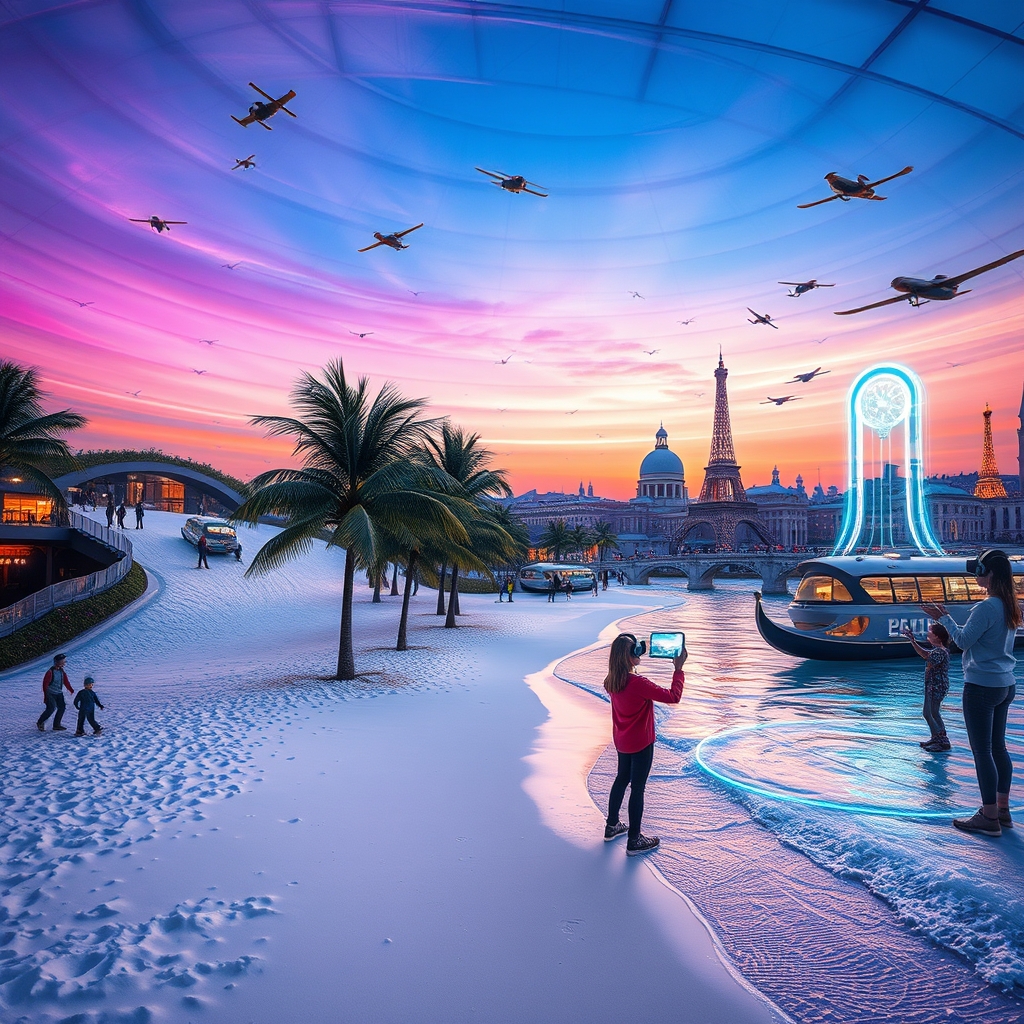
In an era where the boundaries between the natural and the engineered are increasingly blurred, a new wave of leisure destinations is emerging—one that doesn’t rely on the whims of geography or climate to deliver unforgettable experiences. These are not just places to visit; they are meticulously designed realms where every detail is crafted to transport visitors into alternate realities, whether that means diving into an underwater metropolis, skiing down a mountain in the middle of a desert, or wandering through a city that never existed. The rise of artificial worlds is redefining what it means to seek adventure, offering a level of control, customization, and immersion that traditional travel simply cannot match.
The Alchemy of Escapism: Engineering Emotion
At the heart of these artificial worlds lies a fundamental human desire: the need to escape. But what sets these modern marvels apart is their ability to engineer emotion with surgical precision. Take, for example, the indoor ski slopes of Dubai’s Mall of the Emirates. Here, visitors can carve through fresh powder while outside temperatures soar past 100 degrees Fahrenheit. The experience is not just about skiing; it’s about defying expectations, about the thrill of the impossible made tangible. Similarly, artificial beaches like those in Germany’s Tropical Islands Resort offer a slice of paradise complete with palm trees, white sand, and turquoise waters—all under a massive dome where the weather is perpetually perfect. These spaces don’t just replicate nature; they enhance it, stripping away the unpredictability and leaving only the sublime.
This alchemy of escapism is not limited to physical spaces. Virtual reality (VR) and augmented reality (AR) are pushing the boundaries even further, allowing travelers to step into worlds that exist only in code. Imagine donning a headset and suddenly finding yourself on the surface of Mars, or walking through the streets of ancient Rome as it once was. Companies like The Void and Dreamscape Immersive are already making this a reality, blending physical sets with digital overlays to create experiences that are as tactile as they are visual. The result is a form of travel that is unbound by the laws of physics, where the only limit is the imagination of the creators.
Replica Cities and Sci-Fi Worlds: When Fiction Becomes Destination
For those who crave something even more extraordinary, replica cities and sci-fi-themed resorts offer a chance to live out fantasies that were once confined to the pages of novels or the frames of films. In China, the Window of the World theme park compresses global landmarks into a single space, allowing visitors to “travel” from the Eiffel Tower to the Pyramids of Giza in a single afternoon. Meanwhile, in Japan, the Hotel Gracery Shinjuku offers rooms with a view of Godzilla, who looms over the city like a guardian of urban legend. These destinations don’t just borrow from fiction; they invite visitors to become part of the story, blurring the line between observer and participant.
Sci-fi worlds, in particular, are gaining traction as a new frontier in themed escapes. Projects like Starbase, SpaceX’s facility in Texas, are turning the dream of space tourism into a tangible experience, albeit one that is still in its infancy. Closer to Earth, resorts like the Aurora Station concept promise to offer orbital stays where guests can gaze down at the planet from the comfort of a luxury space habitat. While these experiences are currently reserved for the ultra-wealthy, they signal a future where the final frontier is not just for astronauts but for adventurers of all kinds.
The Ethical Landscape: Balancing Wonder and Responsibility
As these artificial worlds grow in popularity, they also raise important questions about sustainability, authenticity, and the ethical implications of creating entirely fabricated experiences. The environmental impact of maintaining indoor ski slopes in the desert or artificial reefs in man-made lakes cannot be ignored. Yet, proponents argue that these spaces can also serve as laboratories for innovation, where sustainable technologies are tested and refined. For instance, some indoor farms and botanical gardens are using advanced hydroponics and LED lighting to create self-sustaining ecosystems that could one day help address food shortages or restore damaged environments.
There’s also the question of authenticity. In a world where experiences can be manufactured, does the value of travel diminish? Or does it evolve into something new—a form of curated adventure where the journey is as much about the story as it is about the destination? The answer may lie in the way these spaces are designed. The most successful artificial worlds are those that don’t just replicate reality but reimagine it, offering something that feels both familiar and entirely novel. They invite visitors to engage with the experience on a deeper level, to question their perceptions, and to see the world through fresh eyes.
Interactive Museums and Pop-Up Installations: The Ephemeral Escape
Not all artificial worlds are permanent. Some of the most compelling experiences are those that exist only for a moment, like pop-up installations or interactive museums that transform ordinary spaces into extraordinary ones. The Museum of Ice Cream, for example, turns dessert into an immersive adventure, where visitors can swim in a pool of sprinkles or slide down a giant ice cream sandwich. These spaces are designed to be Instagrammable, yes, but they also tap into a deeper desire for play and wonder, reminding us that adventure doesn’t always require a passport or a plane ticket.
Pop-up installations, in particular, are redefining the concept of temporary travel. Cities like London, New York, and Tokyo have played host to ephemeral experiences like the “Rain Room,” where visitors can walk through a downpour without getting wet, or the “Van Gogh: The Immersive Experience,” which uses projection mapping to turn the artist’s work into a 360-degree environment. These installations are fleeting by nature, but their impact lingers, offering a glimpse into the future of how we might experience art, culture, and even history.
As we stand on the precipice of this new era of engineered escapism, it’s worth reflecting on what these artificial worlds represent. They are not merely a substitute for the real thing but a testament to human ingenuity, a celebration of our ability to dream, create, and redefine the boundaries of possibility. Whether it’s the thrill of skiing in the desert, the awe of walking through a digital dreamscape, or the joy of diving into a pool of sprinkles, these experiences remind us that adventure is not a place but a state of mind. And in a world where the line between the real and the artificial is increasingly fluid, the only limit to where we can go next is our own imagination.


