
Synthetic Serenity: Exploring the Allure of Man-Made Paradises
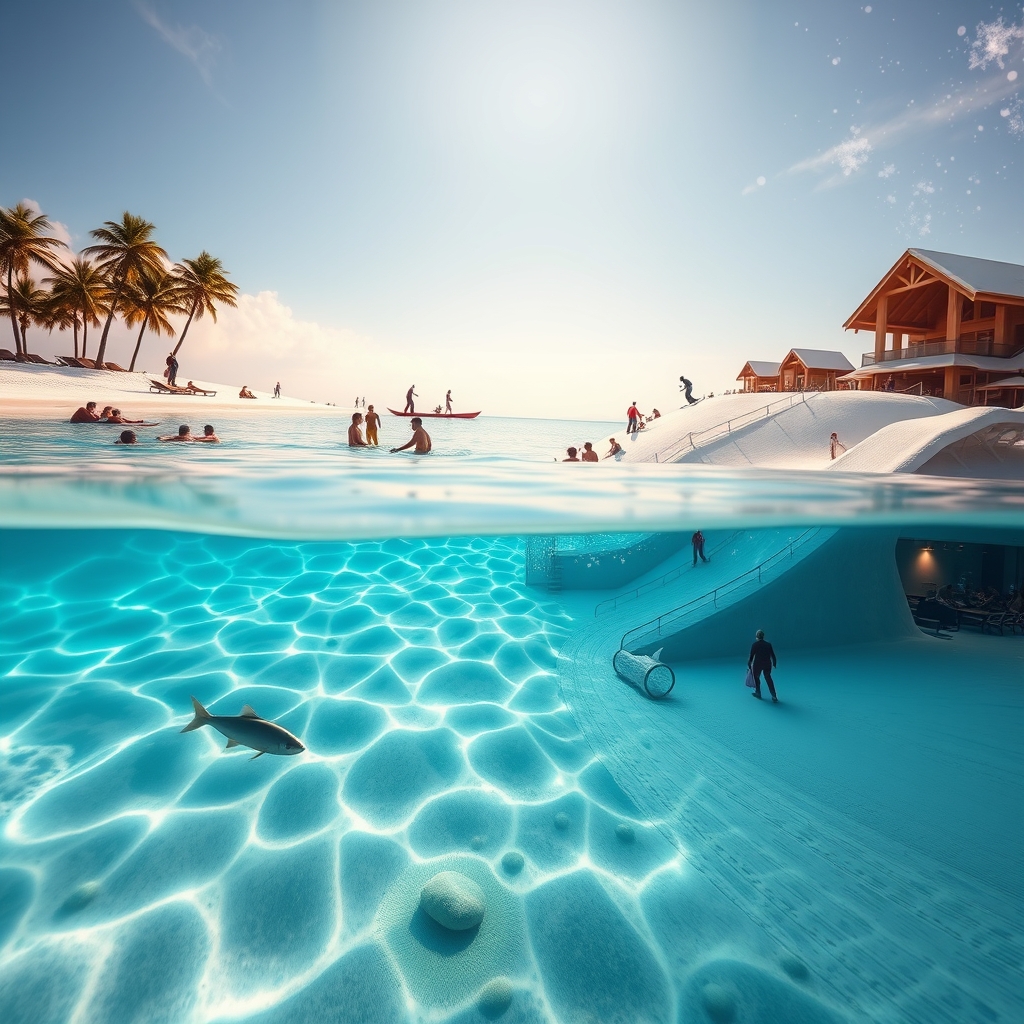
In an era where the boundaries between the natural and the artificial blur more with each passing day, a new kind of travel experience has emerged—one that doesn’t rely on the whims of geography, climate, or even reality itself. These are the engineered escapes that promise not just a getaway, but a complete reinvention of what leisure can be. From the shimmering waves of artificial beaches to the snow-capped peaks of indoor ski slopes, these spaces offer something increasingly rare in our fast-paced world: control. Here, every detail is meticulously crafted, every sensation designed to transport visitors to a realm where the only limit is imagination.
The Rise of the Perfect Getaway
The concept of man-made paradises isn’t new. For centuries, humans have sought to recreate the beauty of nature in gardens, fountains, and even entire landscapes. The Hanging Gardens of Babylon, one of the Seven Wonders of the Ancient World, were an early example of this desire to engineer beauty. Fast forward to the 21st century, and the scale and sophistication of these creations have reached unprecedented heights. Today, entire ecosystems are replicated with such precision that visitors often forget they’re not in the “real thing.”
Take, for instance, the artificial beaches that have sprung up in landlocked cities. Places like the W Dubai – The Palm or the Oasis Beach Tower in Dubai offer pristine sands and turquoise waters, all while being miles away from any natural coastline. These spaces are more than just pools; they’re carefully calibrated environments where the temperature, humidity, and even the scent of the air are designed to mimic a tropical paradise. The sand is imported, the water is filtered and treated, and the palm trees are strategically placed to create the illusion of a secluded island. It’s a testament to how far technology and design have come in replicating the sensory experience of a beach vacation.
Indoor Slopes and Snowy Escapes
For those who crave the thrill of winter sports but live in climates where snow is a rarity, indoor ski slopes have become a game-changer. Facilities like SnowWorld in the Netherlands or Ski Dubai offer year-round skiing and snowboarding on slopes that rival their natural counterparts. These spaces are not just about the physical activity; they’re about the atmosphere. The crisp air, the sound of skis carving through snow, and the sight of snowflakes gently falling—all of it is engineered to create an immersive winter wonderland. Some of these facilities even offer après-ski experiences, complete with cozy lodges and hot chocolate, making them a complete escape from the outside world.
The appeal of these spaces goes beyond convenience. They represent a shift in how we perceive travel and leisure. No longer are we bound by the constraints of season, location, or even weather. If you want to ski in the middle of summer or lounge on a beach in the dead of winter, you can—without ever leaving your city. It’s a level of accessibility that was once unimaginable, and it’s changing the way we think about vacations.
Virtual and Augmented Realities: The Next Frontier
While man-made physical spaces offer a tangible escape, the digital realm is pushing the boundaries even further. Virtual reality (VR) and augmented reality (AR) are transforming the way we experience travel, allowing us to explore destinations that don’t exist in the physical world—or at least, not in the way we perceive them. VR tourism, for example, can transport users to the surface of Mars, the depths of the ocean, or even fictional worlds inspired by their favorite books and movies. Companies like Oculus and HTC Vive are making these experiences more immersive than ever, with high-resolution visuals, spatial audio, and haptic feedback that make the virtual feel almost real.
Augmented reality, on the other hand, enhances the real world by overlaying digital information onto our physical surroundings. Imagine walking through a historical site and seeing it come to life through your AR glasses, with holographic guides explaining its significance or reenacting events from the past. Museums are already experimenting with AR to create interactive exhibits, where visitors can “see” dinosaurs roam or witness ancient civilizations rise and fall. These technologies are not just novelties; they’re redefining what it means to explore and learn.
Replica Cities and Themed Resorts: Living in a Story
For those who prefer their escapes to be rooted in the physical world, replica cities and themed resorts offer a chance to step into a different reality. Places like Venetian Macao or Paris Las Vegas recreate iconic landmarks with such detail that visitors can almost believe they’ve been transported to another country. These spaces are more than just architectural feats; they’re immersive experiences that engage all the senses. The Venetian Macao, for example, features gondola rides through indoor canals, complete with singing gondoliers, while Paris Las Vegas offers a replica of the Eiffel Tower and a bustling Parisian street scene.
Themed resorts take this concept even further by crafting entire environments around a specific narrative. Disney’s Animal Kingdom Lodge immerses guests in an African safari experience, with real animals roaming outside their windows and cultural details that transport them to the heart of the continent. Similarly, Universal’s Harry Potter-themed resorts allow fans to step into the magical world of Hogwarts, complete with butterbeer, interactive wands, and even a ride through the Forbidden Forest. These spaces are designed to make visitors feel like they’re part of the story, blurring the line between observer and participant.
The Future of Engineered Escapes
As technology continues to advance, the possibilities for engineered escapes are virtually limitless. Space tourism, once the stuff of science fiction, is now on the horizon, with companies like SpaceX and Blue Origin offering suborbital flights to civilians. Meanwhile, projects like Mars City are exploring how we might one day create habitable environments on other planets, turning the dream of interplanetary travel into a reality. Closer to home, advancements in biotechnology and sustainable design are making it possible to create even more lifelike and eco-friendly artificial environments.
Yet, as these spaces become more prevalent, they also raise important questions about the future of travel and leisure. Will we lose our connection to the natural world if we can experience its wonders in a controlled environment? Or will these engineered escapes inspire us to appreciate and protect the real thing even more? Perhaps the answer lies in balance—using technology to enhance our experiences without losing sight of what makes the natural world so magical in the first place.
The allure of man-made paradises lies in their ability to offer something that the natural world often cannot: predictability, accessibility, and a sense of wonder that is carefully curated. Whether it’s the thrill of skiing down an indoor slope, the relaxation of lounging on an artificial beach, or the awe of stepping into a virtual world, these spaces remind us that the best getaways are not just about where we go, but how we feel when we get there. In a world that can often feel chaotic and unpredictable, the appeal of a perfectly engineered escape is undeniable—it’s a chance to step into a reality where everything is exactly as it should be, even if just for a little while.


